Since 1989, the Wound Healing Society has grown from a founding vision into the premier international organization advancing the science and practice of wound healing, bringing together researchers, clinicians, and industry partners from around the world.
A group of pioneering clinicians and researchers establishes WHS as the first scientific society dedicated entirely to wound healing research.
1993
A Journal Is Born
Wound Repair and Regeneration launches as the field’s flagship peer-reviewed journal, becoming the leading publication in wound healing science.
2007
SAWC Partnership
WHS co-locates its annual meeting with SAWC, one of the nation’s leading wound care conferences, dramatically expanding the society’s reach to practicing clinicians.
2010s
Guidelines & Education
Landmark clinical guidelines are published. Advances in Wound Care launches in 2012. The Young Professionals Network and Wound Healing U expand the community and deepen member education.
TODAY
1175+ Members. One Mission.
WHS is the premier international organization for wound healing research, home to two respected journals, robust grants and fellowships, and a growing community built for the next generation of scientists and clinicians.
Our Story
The History of WHS
From a small group of dedicated scientists to the field’s premier international organization, here is how WHS came to be.
The Beginning
The Wound Healing Society was founded in May 1989 through the efforts of a group of dedicated wound healing researchers and clinicians who recognized that the science deserved its own dedicated scientific home. The idea was initiated in 1987 by Dr. I. Kelman Cohen of the Medical College of Virginia, who began organizing a formal community around wound healing research and education. Thomas K. Hunt, Dr. Adrian Barbul, Dr. Robert Diegelmann, Dr. Paul Ehrlich, and others joined the effort, and the Society was formally established at a meeting in Bethesda, Maryland in April 1988.
The idea had been building for years. In 1987, Dr. I. Kelman Cohen of the Medical College of Virginia began circulating the concept of a formal organization dedicated to wound healing research and education. By April 1988, a group of founding investigators gathered at the Uniformed Services Medical School in Bethesda, Maryland, to organize what would become the Wound Healing Society. Thomas K. Hunt was elected as the Society’s first president, serving a two-year term, with Adrian Barbul as the first treasurer and Robert Diegelmann as inaugural secretary. The first annual meeting was hosted by Marty Robson in Galveston, Texas.
From its earliest days, WHS set out to fill a critical gap: a genuinely interdisciplinary forum where basic scientists and bedside practitioners could learn from and challenge one another. That founding conviction, that understanding wound biology is fundamental to improving patient outcomes, remains the organizing principle of the Society today.
Growth and Development
At the Society’s second annual meeting, held in Richmond, Virginia, the decision was made to establish a peer-reviewed journal. After considerable discussion, the title Wound Repair and Regeneration was selected, with Thomas K. Hunt and Bill Lindblad serving as the inaugural co-editors. The journal launched in the early 1990s and quickly became the authoritative scientific voice in wound care, giving the field a dedicated outlet for clinical and basic science research in tissue repair and regeneration.
Membership grew steadily as word spread that WHS offered something no other organization did: a forum where surgeons, dermatologists, cell biologists, industry researchers, and government agencies could engage together around the science of wound healing. The Society also established early relationships with the FDA, working to educate regulators on the essentials of wound healing and to shape how new wound healing agents would be evaluated for approval.
By the turn of the millennium, WHS had grown into a truly international organization, with members spanning academia, clinical practice, industry, and government across dozens of countries.
WHS Today
Today the Wound Healing Society represents more than 1,175 members from 33 countries, spanning every corner of the wound healing field. The annual meeting, held jointly as SAWC Spring, draws more than 3,000 attendees each year and remains the premier scientific gathering for wound healing researchers and clinicians worldwide.
Wound Repair and Regeneration has published more than 180 issues since its launch in 1993, with each issue covering basic, translational, and clinical wound healing research. The Society has expanded its programs to include the WHS Fellows Program, the Young Professionals Network, research grants, early career awards, clinical practice guidelines, and a growing library of educational content through Wound Healing U.
More than 35 years after Thomas K. Hunt gathered a small group of scientists around a shared conviction, WHS continues to advance the science of wound healing and bring its findings into clinical practice, one discovery, one guideline, and one new member at a time.
Read the original article in Wound Repair and Regeneration.
Past WHS Presidents
The leaders who have shaped the Society’s direction and advanced its mission across more than three decades.
Sundeep Keswani
2024-2025
Dr. Sundeep Keswani is the Associate Surgeon-in-Chief at Texas Children’s Hospital and holds the Clayton Endowed Chair in Surgical Research. A pediatric surgeon specializing in fetal therapy and ECMO, he leads an NIH-funded laboratory, has published over 160 articles, mentors trainees, and serves as an Executive Governor with the American College of Surgeons.
Traci Wilgus, PhD
2023-2024
Dr. Wilgus is a Fellow Scientist at Regeneron leading a team focused on keloid and fibrosis research.
Ken Liechty, MD
2022-2023
Ken Liechty, MD, is the division chief of pediatric surgery in the University of Arizona College of Medicine – Tucson’s Department of Surgery, as well as director of fetal medicine at Banner – University Medicine and surgeon-in-chief of Banner Children’s at Diamond Children’s Medical Center.
Alan Wells, MD, DMSc
2021-2022
Geoffrey Gurtner, MD
2019-2021
Sashwati Roy, PhD
2018-2019
Elof Eriksson, MD
2017-2018
Marjana Tomic Canic, PhD
2016-2017
Marjana Tomic-Canic, PhD, holds the Eaglstein Chair in Wound Healing and directs the Wound Healing and Regenerative Medicine Research Program at the University of Miami Miller School of Medicine. A WHS member for 25 years and its 2016-2017 president, she has published 175 peer-reviewed articles establishing the field of human wound genomics and received the WHS Lifetime Achievement Award in 2022.
Andrew Baird, PhD
2015-2016
Lisa J. Gould, MD, PhD
2014-2015
Lisa Gould, MD, PhD, FACS has been practicing plastic and reconstructive surgery with an emphasis on difficult wound problems since 1999. A dedicated surgeon-scientist, she brings her passion for innovative wound research and education to her clinical practice, students at all levels, new investigators and the national organizations she serves.
Paul Liu, MD
2013-2014
Robert Diegelmann, PhD
2012-2013
Harriet Hopf, MD
2011-2012
Professor, Anesthesiology and Bioengineering, University of Utah. TK Hunt mentee and WHS member since 1989. Recognized infection control expert, leader, coach and mentor.
Luisa DiPietro, DDS, PhD
2010-2011
Luisa A. DiPietro is a Distinguished Professor at the University of Illinois Chicago. Over 25 years, her lab has studied mechanisms of wound healing and regeneration, focusing on inflammation, angiogenesis, and oral mucosal repair. She is the proud mentor of >70 trainees, many of whom continue to advance the field.
Patricia A. Hebda, PhD
2009-2010
Patricia A. Hebda, PhD, spent her faculty career at the University of Pittsburgh researching wound healing in skin and mucosa, tissue engineering, and biological therapies for tissue regeneration. A longtime WHS leader, she served as president in 2009-2010 and as editor-in-chief of Wound Repair and Regeneration for a decade from 2006 to 2015.
Allen Holloway, MD
2008-2009
Dr. Holloway graduated from Harvard Medical School, and served on the faculty at the University of Washington, Arizona State University and the University of Arizona where he worked in the Department of Surgery at Valleywise Hospital in Phoenix. He has done extensive research and been widely published.
Adrian Barbul, MD*
2006-2008
A General and Trauma Surgeon, Dr. Barbul led a research laboratory examining the
influence of amino acid nutrition and immunity of the healing cascade. He has
authored over 190 original publications, over 50 textbook chapters and has edited
two books. As founding member and then President of the Wound Healing Society, he
led a team charged with the promulgation of care guidelines for arterial, diabetic, venous
and pressure ulcers which have been widely disseminated, and more recently updated.
Jeffrey Davidson, PhD
2005-2006
Vincent Falanga, MD
2004-2005
Lillian B. Nanney, PhD
2003-2004
David L. Steed, MD
2001-2003
Gregory S. Schultz, PhD
1999-2001
Thomas A. Mustoe, MD
1997-1999
Richard A. F. Clark, MD
1996-1997
Martin C. Robson, MD
1995-1996
Anita B. Roberts, PhD
1994-1995
I. Kelman Cohen, MD
1993-1994
H. Paul Ehrlich, PhD
1992-1993
Thomas K. Hunt, MD
1989-1992
Past Board of Directors
A record of the individuals who have served on the WHS Board of Directors since the Society’s founding.
Past Board of Directors
Adrian Barbul, MD
2016–2019
Arie Philips, PhD
2016–2019
Heather Powell, PhD
2016–2018
Robert Galiano, MD, FACS
2015–2018
Harriet Hopf, MD
2015–2018
Sundeep Keswani, MD, FACS, FAAP
2015–2018
Katherine Radek, PhD
2015–2018
Braham Shroot, PhD
2006–2018
Boris Hinz, PhD
2014–2017
Olivera Stojadinovic, MD
2013–2016
Susan Volk, MVD, PhD
2013–2016
Susan Opalenik, PhD
2014–2015
Barbara Bates-Jensen, PhD
2012-2015
H. Paul Ehrlich, PhD
2012–2015
Geoffrey Gurtner, MD
2012–2015
Manuela Martins-Green, PhD
2012–2015
Gayle Gordillo, MD
2011–2014
Kenneth Liechty, MD
2011–2014
James J. Tomasek, PhD
2011–2014
Joyce K. Stechmiller, PhD
2010–2013
Stephanie Bernatchez, PhD
2009–2012
Nicole Gibran, MD
2009–2012
Robert Kirsner, MD, PhD
2006-2012
Laura K.S. Parnell, BS, MS, CWS
2006-2012
Laura Bolton, PhD
2008–2011
Lillian Nanney, PhD
2008–2011
Alan Wells, PhD
2008–2011
Robert Diegelmann, PhD
2007–2010
Oluyinka Olutoye, MD, PhD
2007–2010
Chandan Sen, PhD
2007–2010
Adrian Barbul, MD, FACS
2006-2009
Luisa DiPietro, DDS, PhD
2006-2009
Thomas Mustoe, MD
2006-2009
Jeffrey Davidson, PhD
2005-2008
Kris Kieswetter, PhD
2005-2008
Robert Warriner, III, MD
2005-2008
Lisa Gould, MD, PhD
2004-2007
David Margolis
2004-2007
Bill Tawil, PhD
2004-2007
Thomas Serena, MD, FACS
2003-2006
Timothy Crombleholme, MD
2001-2004
Harriet Hopf, MD
2001-2004
Linda Phillips, MD
2001-2004
Patricia Hebda, PhD
2000-2002
Edward E. Tredget, MD
2000-2002
Past Board of Directors
No Term
Judith Abraham, PhD
Carlos Blanco, MD
Michael Caldwell, MD, PhD
I. Kelman Cohen, MD
William Eaglstein, MD
Elof Eriksson, MD, PhD
Michael Franz, MD
Michael Caldwell, MD, PhD
JoAnne Whitney, PhD
Katherine Sprugel
David G. Greenhalgh, MD
Gregory Schultz, PhD
Allen Holloway, MD
Andrew Johnson, MS, MBA
W. Lawrence, MD
George Martin, PhD
John McPherson
Mary Beth Regan, PhD
George Rodeheaver, PhD
Christopher Attinger, MD
Henry Brown
Vincent Falanga, MD
Richard Clark, MD
Annette Wysocki, PhD
David Steed, MD
Peter Sheehan, MD
Diane Cooper, PhD
H. Paul Ehrlich, PhD
Vincent Falanga, MD
Warren Garner, MD
Fred Grinnell, PhD
Thomas Hunt, MD
Thomas Krummel, MD
William Lindblad, PhD
Bruce Mast, MD
Ben Walthall
Braham Shroot, PhD
Dorne Yager, PhD
Steve Powick
Anthony Sank
Martin Robson, MD
Bengt Zederfelt
Warren Rohtmann, PhD
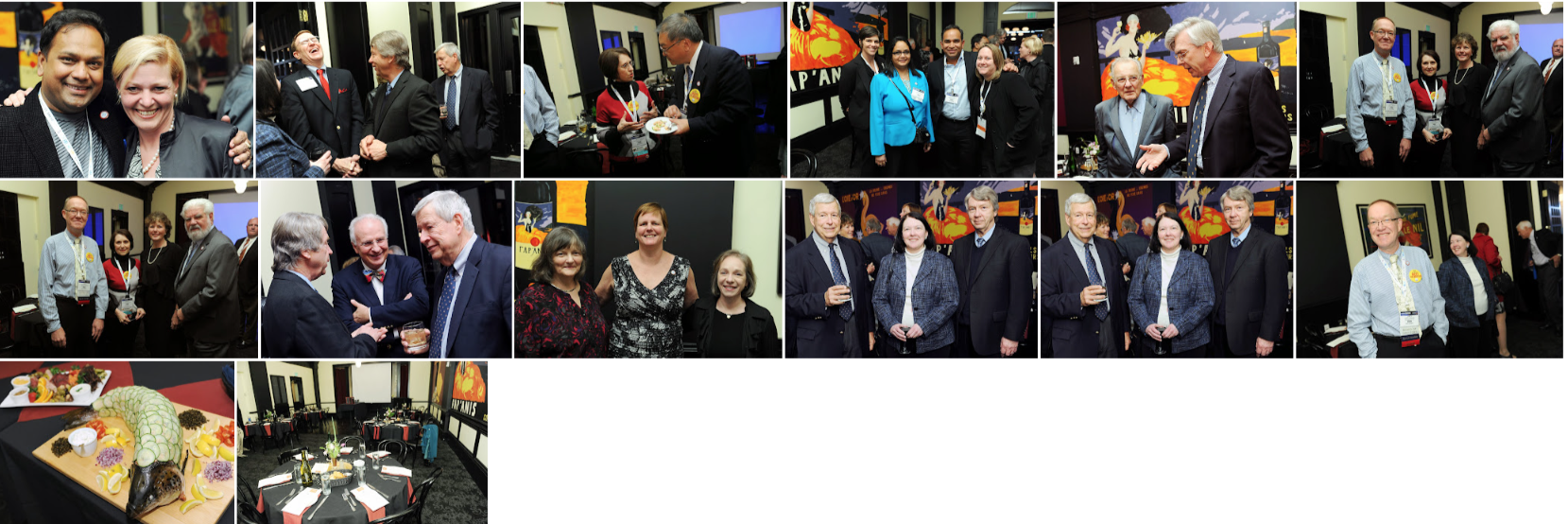
Photo Gallery
Annual meeting moments, board gatherings, and community milestones captured
over 35 years.
Explore Our Organization
Learn more about who we are, what drives our science, and how WHS is shaping the future of wound healing research and clinical practice.
Mission & Vision
WHS exists to advance wound healing science and bring its findings into clinical practice. Our mission unites basic researchers, translational scientists, and clinicians around a shared commitment to improving patient outcomes.
Meet the researchers and clinicians who guide WHS. Our leadership represents the full breadth of the wound healing field, from basic science to clinical practice, and brings decades of combined expertise to the organization.
Founded in 1989, WHS has spent more than three decades building the scientific home that wound healing research deserves. Explore how the society grew from a founding vision into the premier international organization in the field.
WHS is governed by its members and guided by transparent, peer-driven principles. Review our bylaws and organizational structure to understand how decisions are made and how the society is accountable to its community.